






What are the costs associated with Bee Removal In Oakville?
- 🐝 Average cost range: $150 – $400 per nest
Most homeowners in Oakville will pay within this range depending on the nest’s size, species (wasp vs. hornet vs. bee), and accessibility. The lower end typically applies to small, outdoor nests, while the higher end applies to multiple or concealed nests that require specialized equipment or longer service time. - 🐝 Small wasp nest (accessible, outdoors): $150 – $200
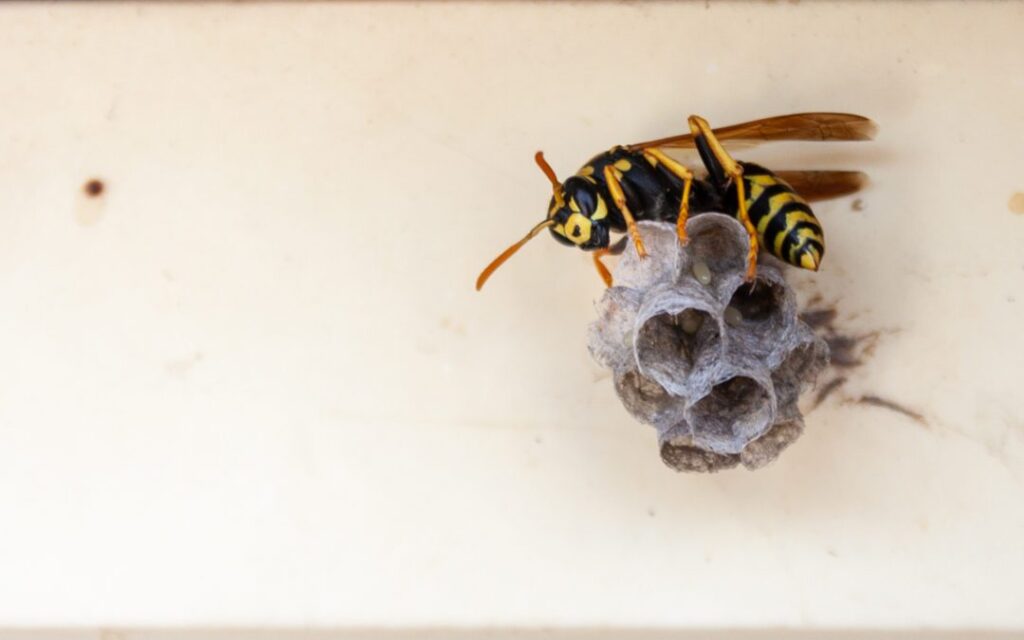
Paper wasps often build nests under eaves, deck railings, or outdoor furniture. Because they are visible and easy to reach, removal is quick, usually requiring only a single application of insecticide spray or dust. These are the least costly jobs since they take minimal time and no special equipment. - 🐝 Medium wasp nest (harder to reach, under decks/eaves): $200 – $300
Nests that are tucked into difficult spots, such as behind siding, under porches, or in tree branches, take more time and safety gear. Exterminators may need ladders, protective suits, and additional insecticide. These jobs also often come with a short-term guarantee in case the colony re-establishes itself. - 🐝 Large or multiple nests: $300 – $400+
Large hornet nests, or situations where multiple wasp nests are found on a property, drive up the price. These nests are aggressive, house thousands of insects, and may require multiple visits or structural modifications to remove. For businesses or larger residential properties, costs can rise past $500. - 🐝 Bee hive relocation (eco-friendly, live removal): $200 – $500
Honey bees are considered beneficial and should not be exterminated. In Oakville, pest control companies often partner with local beekeepers to safely relocate hives. Prices vary depending on whether the hive is inside a wall, chimney, or tree cavity. Live relocation is more complex, often involving cutting into structures and carefully extracting the colony. - 🐝 Emergency or same-day service: +$50 – $100 surcharge
For homeowners who discover a nest close to an entryway, school, or play area, urgent removal may be necessary. Pest control companies often charge an additional emergency fee for evening, weekend, or same-day service calls. - 🐝 Seasonal factors: Prices may rise in peak summer (July–September)
During mid-to-late summer, wasp and hornet populations reach their peak, making removal more dangerous. Demand for services is also highest during this period, which can push prices toward the higher end of the scale. Early-season nest removal (May–June) is generally cheaper and easier. - 🐝 Preventive treatment (sprays/barrier protection): $100 – $150 add-on
Many companies offer preventive spraying of eaves, sheds, and outdoor structures to deter future nests. This is typically an add-on service during spring or early summer and is not a guaranteed solution but can significantly reduce nesting activity. - 🐝 Warranty/guarantee (30–90 days free re-service)
Reputable Oakville pest control companies often provide a short-term warranty. If the same nest reappears or activity continues within the warranty period, they will return at no extra charge. Longer guarantees are usually reserved for higher-priced jobs.
Common Wasp & Hornet Species in Oakville / Halton Region
✅ Social Wasps (aggressive, build colonies)
- Eastern Yellowjacket (Vespula maculifrons)
– Common in lawns, shrubs, wall voids - German Yellowjacket (Vespula germanica)
– Often nests inside wall cavities or attics - Common Aerial Yellowjacket (Dolichovespula arenaria)
– Builds paper nests in trees or eaves - Bald-faced Hornet (Dolichovespula maculata)
– Actually a wasp; large grey aerial nests - European Paper Wasp (Polistes dominula)
– Slender-bodied; nests under soffits or decks
❗ Solitary Wasps (non-aggressive, helpful)
- Cicada Killer Wasp (Sphecius speciosus)
– Huge solitary wasp, harmless to humans - Mud Dauber Wasp (Sceliphron caementarium)
– Makes tube-like mud nests under eaves - Thread-waisted Wasp (Ammophila spp.)
– Slender with narrow “waist”; good for gardens - Great Golden Digger Wasp (Sphex ichneumoneus)
– Harmless; preys on insects in sandy soil
🐝 More Native Bees in Oakville we remove all kinds!
Beyond honeybees and bumblebees, Ontario is home to over 400 native bee species. Notable ones seen in Oakville include:
- Mining Bees (Andrena spp.)
– Solitary ground-nesters active in early spring - Leafcutter Bees (Megachile spp.)
– Cut round pieces of leaves to line nests - Mason Bees (Osmia spp.)
– Use mud to seal nest holes in wood or brick - Cuckoo Bees (Nomada spp.)
– Parasitic bees that lay eggs in others’ nests - Long-Horned Bees (Melissodes spp.)
– Known for their long antennae; good pollinators
⚠️ Invasive or Concern-Raising Species
- Asian Giant Hornet (Vespa mandarinia) – Not present in Oakville but monitored province-wide
- European Hornet (Vespa crabro) – Rare but spotted in parts of Southern Ontario
🏡 Where These Insects Are Found in Oakville
- Parks and Gardens: Bronte Creek, Shell Park, Gairloch Gardens
- Residential Areas: soffits, sheds, fences, lawns
- Woodlands/Trails: Sixteen Mile Creek, Joshua’s Creek trails
- Urban Farms and Nurseries: Native bees support pollination here
🚫 Who to Call for Bee or Wasp Removal in Oakville
- Pestline Oakville – licensed pest control
Pollination Benefits from Bees in Oakville
Bees are crucial to Oakville’s local ecology, particularly in pollinating backyard gardens, community farms, and wildflowers across natural spaces like Lions Valley Park and Bronte Creek. Species like mason bees and leafcutter bees are among the most efficient pollinators in urban gardens. These solitary bees don’t live in hives, and because of their gentle nature, they’re often promoted by local conservation groups through “bee hotel” projects. Their pollination boosts local food yields for crops like tomatoes, berries, and squash.
🏠 Where Wasps Nest in Oakville Neighborhoods
Wasps in Oakville are commonly found nesting in hard-to-see places like behind siding, inside attic vents, under porch railings, and within soil near foundation walls. Species such as German yellowjackets are notorious for nesting inside wall voids, making them a nuisance during home renovations or pest inspections. Aerial nesters like the bald-faced hornet prefer trees or high gutters, which often go unnoticed until a resident or pet gets stung. Professional removal is recommended to avoid triggering swarms.
☀️ Seasonal Activity of Bees and Wasps
In Oakville, bee and wasp activity starts around April or May and peaks during the hot, humid months of July and August. This is when queens are laying eggs, colonies are growing, and insects become more visible near garbage bins, patios, and flower beds. By late summer, wasps become more aggressive as their natural food sources diminish. Bees, in contrast, remain mostly docile unless disturbed, with bumblebees continuing to forage until early fall.
🚸 Are Bees and Wasps Dangerous for Kids or Pets?
For most Oakville families, bees are not considered dangerous unless someone has a known allergy to stings. However, wasps can pose a real risk, especially aggressive species like yellowjackets, which can sting multiple times. Pets may accidentally dig up ground nests or snap at flying insects, which could result in multiple stings around the mouth or eyes. Keeping outdoor trash sealed and monitoring high-activity zones like backyard decks can significantly reduce encounters.
🐾 How to Protect Gardens Without Harming Pollinators
Oakville gardeners often struggle with protecting plants from wasps without harming bees. Natural deterrents like planting peppermint, citronella, and eucalyptus can help repel wasps without discouraging bees. Avoiding chemical sprays during daylight hours and using bee-safe deterrents (like decoy wasp nests or vinegar traps) is a common tactic. Local gardening groups also recommend installing bee baths and pollinator-friendly flowerbeds to encourage good bee activity and discourage wasps from lingering.
🛑 Who Regulates Bee and Wasp Removal in Oakville
In Oakville, wildlife and pest issues involving bees and wasps may fall under the Halton Region Public Health or local bylaw enforcement, depending on the severity. If the insect nest poses no threat, conservation groups may opt for relocation—especially for native bees like bumblebees. On the other hand, nests inside structures or near schools may require licensed pest control. Companies like Pestline or Halton Wildlife offer fast removal services while preserving protected species where possible.
The Role of Bees in Oakville’s Ecosystem
Bees play a critical ecological role in Oakville by pollinating a wide range of local plants, fruits, and vegetables. Whether it’s a backyard garden in Glen Abbey or a community green space near Bronte Creek, bees are vital for maintaining biodiversity. Native bees such as bumblebees and mason bees are especially valuable because they begin pollinating early in the season, ensuring successful crop and flower growth even before honeybee colonies become active.
🪰 Wasp Behavior and Aggression in Suburban Areas
Wasps in Oakville are known for their highly territorial behavior, especially in late summer when food becomes scarce. Unlike bees, which typically sting only when provoked, many wasp species—such as the eastern yellowjacket—will defend their nests aggressively with multiple stings. This makes them a serious concern around homes, playgrounds, and outdoor patios. Residents should be cautious near overhangs, sheds, or wood piles where wasps often nest.
🐝 Solitary Bees vs. Social Bees in Oakville
Not all bees in Oakville live in hives. Solitary bees, like sweat bees and leafcutter bees, build individual nests in soil or wood. These bees are excellent pollinators and are generally non-aggressive. In contrast, social bees like honeybees and bumblebees live in colonies and are more likely to defend their nests if disturbed. Understanding the difference helps homeowners know when to call a beekeeper for relocation rather than extermination.
🛑 Identifying Wasp Nests Around the Home
Wasp nests come in many forms depending on the species. Paper wasps tend to build umbrella-shaped nests under eaves, while hornets prefer round aerial nests in trees. Ground wasps dig holes in lawns, and yellowjackets may infiltrate walls or attics. In Oakville’s older neighbourhoods like Old Oakville and Kerr Village, structural gaps in homes create perfect nesting spots. Spotting a nest early can prevent serious infestations and protect against stings.
🌼 How Bees Support Local Agriculture and Gardens
Oakville’s urban farming initiatives and community gardens depend heavily on bees for success. Crops such as cucumbers, pumpkins, and tomatoes rely on bee pollination to produce fruit. Without sufficient bee populations, residents may see lower garden yields and declining plant health. Fortunately, local conservation groups often host events encouraging residents to plant pollinator-friendly species like milkweed, lavender, and coneflowers in their yards.
🚨 Wasps in Waste and Food Areas
Wasps are notorious for scavenging sugary drinks, meats, and garbage—making them common pests during barbecues or park picnics. In areas like Lakeside Park or Coronation Park, public waste bins often attract yellowjackets by the hundreds. Residents can reduce these encounters by keeping food sealed outdoors, using wasp traps, and promptly covering compost and trash. Sealing cracks in fences and decks also discourages nesting.
Identifying Bee Activity Around Your Oakville Property
Bee activity in Oakville typically begins in early spring, especially in gardens, wooden structures, and wall crevices. Homeowners may notice increased buzzing near window frames, deck railings, or flower beds. While honeybees are social and live in hives, solitary species like mason bees or carpenter bees often nest in untreated wood or small holes. Properly identifying the type of bee helps determine whether the situation calls for control, relocation, or simple prevention measures.
🏡 Preventing Bee Nesting Around Homes and Decks
Preventing bees from nesting near your Oakville home begins with routine maintenance. Sealing holes in siding, soffits, or wood trim can block carpenter bees from boring tunnels. Painting or staining exposed wood surfaces helps deter nesting. Gardeners should also avoid placing flowering plants directly beside doorways or patios. For those using bee hotels, positioning them away from high-traffic zones helps protect both people and pollinators.
🛠️ Humane Bee Control and Relocation in Oakville
Because many bee species are beneficial and protected, especially in Ontario, removal must be done carefully. Professional beekeepers in Oakville offer humane bee relocation services, particularly for honeybees and bumblebees. These specialists safely transport entire hives to conservation zones or managed farms. Attempting DIY removal using sprays or smoke can harm bees and violate local bylaws, especially if the bees are pollinating endangered plants nearby.
☎️ When to Call Bee Control Professionals in Oakville
If you discover a bee nest in your attic, wall, or shed, and there’s risk of stings or structural damage, it’s time to contact bee control experts. Oakville residents should avoid disturbing active hives, especially in tight spaces where bees can become aggressive. Pest control companies like Pestline and local wildlife services have the proper equipment and permits to handle infestations responsibly. Most offer free inspections and same-day service during peak season.
🌸 Balancing Bee Control and Pollinator Protection
While controlling unwanted bee nests is important for safety, Oakville’s bee population is vital for the environment. Residents are encouraged to choose bee-safe practices like relocating nests instead of extermination. Installing pollinator gardens far from the home helps support native bees while reducing the chance of them nesting in risky spots. Bee control in Oakville is most effective when it combines safety, sustainability, and long-term prevention.
1. How do I know if I have a wasp or bee problem in my Oakville home?
A bee or wasp issue often starts subtly—buzzing near soffits, small holes in wooden structures, or frequent insect traffic around one area. Wasps tend to fly in straight patterns and gather near garbage, while bees hover around flowers and greenery. If you see a concentrated swarm or a hanging paper nest near your home, especially in areas like Glen Abbey or Bronte, you may be dealing with a wasp colony. Bee hives are more likely hidden in walls or trees and may involve hundreds or thousands of individuals.
🐝 2. Are wasps and bees protected in Oakville or Ontario?
Yes, certain bee species are legally protected under Ontario’s Endangered Species Act and the Species at Risk Act (SARA). The rusty patched bumblebee, once common in Southern Ontario, is now endangered and cannot be legally exterminated. That’s why Oakville pest control companies must identify the species first—removing honeybees through relocation with registered beekeepers, while only treating non-protected wasps or nuisance species. Always verify that a company follows humane practices and conservation laws.
🐝 3. What should I do if I find a wasp nest near my Oakville home?
First and foremost, do not disturb the nest. Wasps will aggressively defend their colonies, especially if the nest is mature. Keep children and pets indoors and avoid lawn maintenance near the nest. In Oakville, nests are often found in eaves of two-story homes, on privacy fences, or under deck stairs. Call a licensed wasp control service that offers safe removal options using species-specific dusts or sprays. Professionals will also inspect nearby areas for secondary nests.
🐝 4. How much does bee or wasp removal cost in Oakville?
Most professional wasp or bee removals in Oakville cost between $150–$350, with costs rising for hard-to-reach nests (e.g., inside walls or tall trees). Emergency same-day removals during July and August can cost more. Humane bee relocation services may start at $250–$400, depending on whether the hive is inside a structure. Some Oakville companies offer free inspections, seasonal contracts, or bundled pest packages to reduce overall pricing for recurring issues.
🐝 5. Can I remove a wasp nest myself?
DIY nest removal is risky and not recommended—especially for overhead or ground nests. Store-bought sprays may only kill surface wasps, while the colony inside remains active. Wasps can sting multiple times, and ladder-related accidents are common during amateur removals. In Oakville’s older neighbourhoods like Old Oakville and Morrison, wasps often hide behind vinyl siding or rooflines, making safe access difficult without specialized gear and insecticides.
🐝 6. Where do wasps commonly nest in Oakville homes?
Wasps choose warm, dry, and concealed areas. In Oakville, common nesting sites include:
- Soffits and attic eaves
- Garden sheds and under porch stairs
- Behind exterior lights, vents, and shutters
- Inside barbecue covers and playground equipment
- Underground holes in lawns and along walkways (especially by yellowjackets)
Frequent sightings of wasps entering the same area repeatedly is a strong sign of a hidden nest nearby.
🐝 7. Do pest control companies relocate bees or just exterminate them?
Top-rated pest control companies in Oakville prioritize bee relocation over extermination. Honeybees and bumblebees, being critical pollinators, are typically removed using vacuum boxes and special transfer containers by professional beekeepers. Companies may partner with local conservation groups or farms to rehome the bees. If extermination is necessary (e.g., carpenter bees causing structural damage), the process must still comply with pesticide regulations and ecological best practices.
🐝 8. What time of year are wasps and bees most active in Oakville?
Wasp and bee season in Oakville starts in late April and peaks in July and August, when colonies are at full size. Wasps become most aggressive in late summer and early fall, as their food sources diminish. This is also when they’re more likely to scavenge from picnic tables, garbage bins, and recycling containers. Bees, meanwhile, remain active as long as flowers bloom and temperatures stay above 10°C—often through to October.
🐝 9. Are carpenter bees a serious problem in Oakville?
Yes, carpenter bees are common in Oakville neighborhoods with older wooden decks, fences, or cedar siding. These solitary bees drill small round holes in untreated wood to lay eggs. While they don’t sting unless provoked, their repetitive nesting can weaken structural wood over time. Telltale signs include sawdust piles, visible entry holes, and buzzing in the same area year after year. Preventing carpenter bees involves sealing wood and using bee-safe repellents early in spring.
🐝 10. How can I prevent wasps or bees from nesting again?
The best prevention is proactive maintenance:
- Seal all cracks and gaps in siding, soffits, and fascia
- Stain or paint exposed wood, especially fences and decks
- Keep outdoor trash tightly sealed and clean spills quickly
- Avoid leaving sugary drinks or food outdoors
- Install wasp traps in spring to catch new queens before they build nests
- Use bee-safe repellents or professional-grade residual insecticides around potential nesting zones
Annual inspections by a licensed Oakville pest control company can catch early activity and prevent full-blown infestations.